
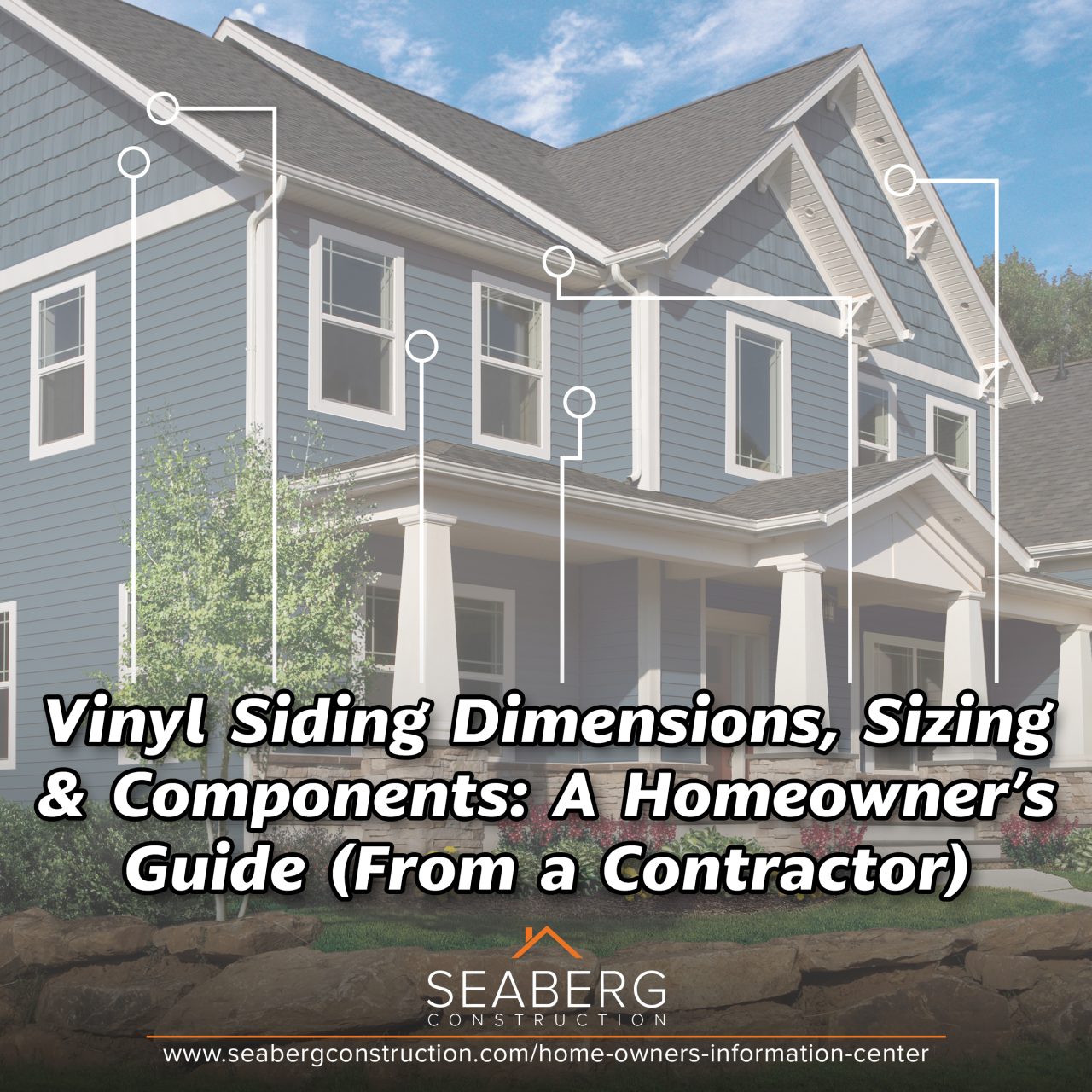
Vinyl Siding Dimensions, Sizing & Components: A Homeowner’s Guide (From a Contractor)
Clean vinyl siding installation showing proper alignment and strong curb appeal.
Vinyl siding is one of the most popular exterior finishes in New England—and for good reason. It’s durable, cost-effective, and low maintenance. But from a contractor’s perspective, it’s also one of the most misunderstood materials when it comes to dimensions, sizing, and overall system design.
Most homeowners start by thinking about color. The reality is, color is the final decision—not the first. What really determines how your siding project turns out is everything behind it: panel size, profile, thickness, trim layout, and installation technique.
If you’re just getting started, you can explore options here:
https://seabergconstruction.com/residential-siding-rhode-island/
Or visualize different styles on your home with our design tool:
https://seabergconstruction.com/your-instant-siding-design/
What Vinyl Siding Actually Is (And Why Dimensions Matter)
Vinyl siding is manufactured from polyvinyl chloride (PVC)—a durable plastic designed to withstand moisture, temperature swings, and long-term exposure to the elements.
For industry standards and deeper technical insight, the Vinyl Siding Institute is a trusted source.
From a contractor’s standpoint, here’s what matters most:
- The dimensions of each panel affect how many seams you’ll see
- The layout strategy determines how balanced your home looks
- The installation method controls whether the siding performs or fails
A house with perfectly installed, properly sized siding will look clean and intentional. The same material installed poorly will look uneven, cheap, and may fail early.
If you want to actually see how different layouts change the look of your home, use this:
https://seabergconstruction.com/your-instant-siding-design/
Standard Vinyl Siding Panel Lengths

12-foot vinyl siding panels installed across a residential exterior wall.
Panel length plays a bigger role than most homeowners realize—especially when it comes to seams.
Typical panel lengths include:
- 12 ft (industry standard)
- 12.5 ft (manufacturer-specific)
- 16 ft (used to reduce seams on long walls)
What this means for your home:
- Shorter panels = more seams
- Longer panels = cleaner look, but harder to install
- Poor installation becomes more obvious with longer panels
Contractor insight:
We always plan panel layout before installation starts. Random seams across a wall are one of the fastest ways to make a new siding job look sloppy.
Vinyl Siding Widths (Profiles Explained)

Clapboard style vinyl siding profile showing a classic, traditional appearance.
When people talk about siding “size,” they’re often referring to profile width, which controls how the siding looks once installed.
Common vinyl siding profiles:
- Double 4” (D4) – traditional, most common
- Double 4.5” – slightly more updated
- Double 5” (D5) – wider, more modern
- Triple 3” (T3) – more lines and texture
- Dutch Lap – shadowed edge for added depth
How to think about it:
- Narrow profiles → more texture, more traditional
- Wider profiles → smoother, more modern appearance
This is one of the biggest visual decisions you’ll make. If you’re unsure what fits your home, test different profiles instantly:
https://seabergconstruction.com/your-instant-siding-design/
Vinyl Siding Thickness (Where Quality Matters)
Thickness is where quality really starts to separate.
Standard thickness ranges:
- .035”–.040” → builder-grade, lighter material
- .042”–.046” → standard residential quality
- .048”+ → premium, higher durability
Why this matters in New England:
- Thinner siding is more likely to crack in cold weather
- It can warp or ripple in heat
- It doesn’t hold its shape as well over time
Contractor take:
If you’re planning to stay in your home long-term, going with thicker siding is one of the smartest investments you can make.
See siding options we recommend for this region:
https://seabergconstruction.com/residential-siding-rhode-island/
How Vinyl Siding Is Measured

Measuring exterior walls to calculate siding quantities accurately.
Vinyl siding is measured in squares, not linear feet.
1 square = 100 square feet
Basic estimating process:
- Measure each wall (height × width)
- Subtract windows and doors
- Add 10–15% for waste and cuts
This is the same concept used in roofing and other exterior work.
The Core Components of a Vinyl Siding System

Diagram showing the full vinyl siding system including panels and trim components.
Vinyl siding is not just panels—it’s a full system designed to handle water, airflow, and expansion.
Every piece plays a role in:
- Keeping water out
- Allowing movement
- Creating a finished look
We walk homeowners through this entire system during consultations:
https://seabergconstruction.com/residential-siding-rhode-island/
Starter Strip (The Foundation)

Starter strip installed level at the base of the wall to begin the siding system.
- Installed at the bottom of the wall
- Locks in the first course of siding
Key point:
If this line isn’t perfectly level, the entire installation will look off.
J-Channel (Clean Edges Around Openings)

J-channel installed around a window to create a clean edge.
- Used around windows, doors, and rooflines
- Allows siding to expand and contract
Corner Posts (Structure & Appearance)

Corner post defining the vertical edge of a home exterior.
- Hides panel edges
- Defines corners
- Allows movement
Utility Trim (Undersill Trim)


Utility trim securing a cut siding panel under a window.
- Holds cut panels in place
- Finishes top edges
Soffit & Fascia (Completing the System)

Vented soffit panels installed under the roof overhang.
- Soffit = ventilation
- Fascia = roof edge protection
Why Proper Sizing Matters

Example of siding buckling due to improper installation and lack of expansion space.
Vinyl siding is designed to move with temperature changes.
If it’s installed incorrectly, you’ll see:
- Buckling
- Warping
- Gaps
- Noise during wind
Proper installation includes:
- Leaving expansion gaps
- Not nailing panels tightly
- Allowing natural movement
This is one of the biggest differences between a professional install and a rushed job.
What Works Best in New England

Vinyl siding on a home exposed to harsh New England coastal weather.
Homes in Rhode Island and surrounding areas deal with:
- Freeze-thaw cycles
- Moisture and salt air
- High winds
Best practices:
- Use .042”+ thickness
- Prioritize installation quality
- Focus on trim and detailing
See siding options designed for this environment:
https://seabergconstruction.com/residential-siding-rhode-island/
Choosing the Right Look


Side-by-side comparison of modern and traditional vinyl siding styles.
General style guidelines:
- Traditional homes → D4 or T3
- Modern homes → D5
- More depth → Dutch lap
Contractor insight:
Profile choice usually impacts the look more than color.
Try different styles on your home:
https://seabergconstruction.com/your-instant-siding-design/
Insulated Vinyl Siding


Foam-backed insulated siding showing added thickness and support.
Features:
- Foam backing (3/8”–1”)
- Increased rigidity
- Improved efficiency
Common Mistakes to Avoid

Poor siding installation showing uneven lines and visible gaps.
- Choosing based on color only
- Using thinner materials to save money
- Ignoring seams and layout
- Hiring the lowest bidder
Avoid these issues by working with experienced installers:
https://seabergconstruction.com/residential-siding-rhode-island/
Final Thoughts

Finished vinyl siding project with clean lines and strong long-term curb appeal.
A successful siding project comes down to:
- Proper sizing and planning
- Quality materials
- Professional installation
From a homeowner’s perspective:
- It looks right
- It performs over time
- It adds value to your home
If you’re ready to move forward:
Explore your options → https://seabergconstruction.com/residential-siding-rhode-island/
Design your home → https://seabergconstruction.com/your-instant-siding-design/
Contact us → https://seabergconstruction.com/about-us-roofing-company/contact-us/

Read Seaberg Construction’s Google reviews left by homeowners like yourself: https://tinyurl.com/kkxwhx8k
Follow us on Facebook: www.facebook.com/seabergconstruction and Instagram: www.instagram.com/seabergconstruction to stay up-to-date with our current projects and news.
To obtain your complimentary estimate from Seaberg Construction, please complete the form available on our website: https://seabergconstruction.com/about-us-roofing-company/contact-us/
And, don’t forget to read our other blog posts for more home improvement tips and ideas: http://seabergconstruction.com/home-owners-information-center/