
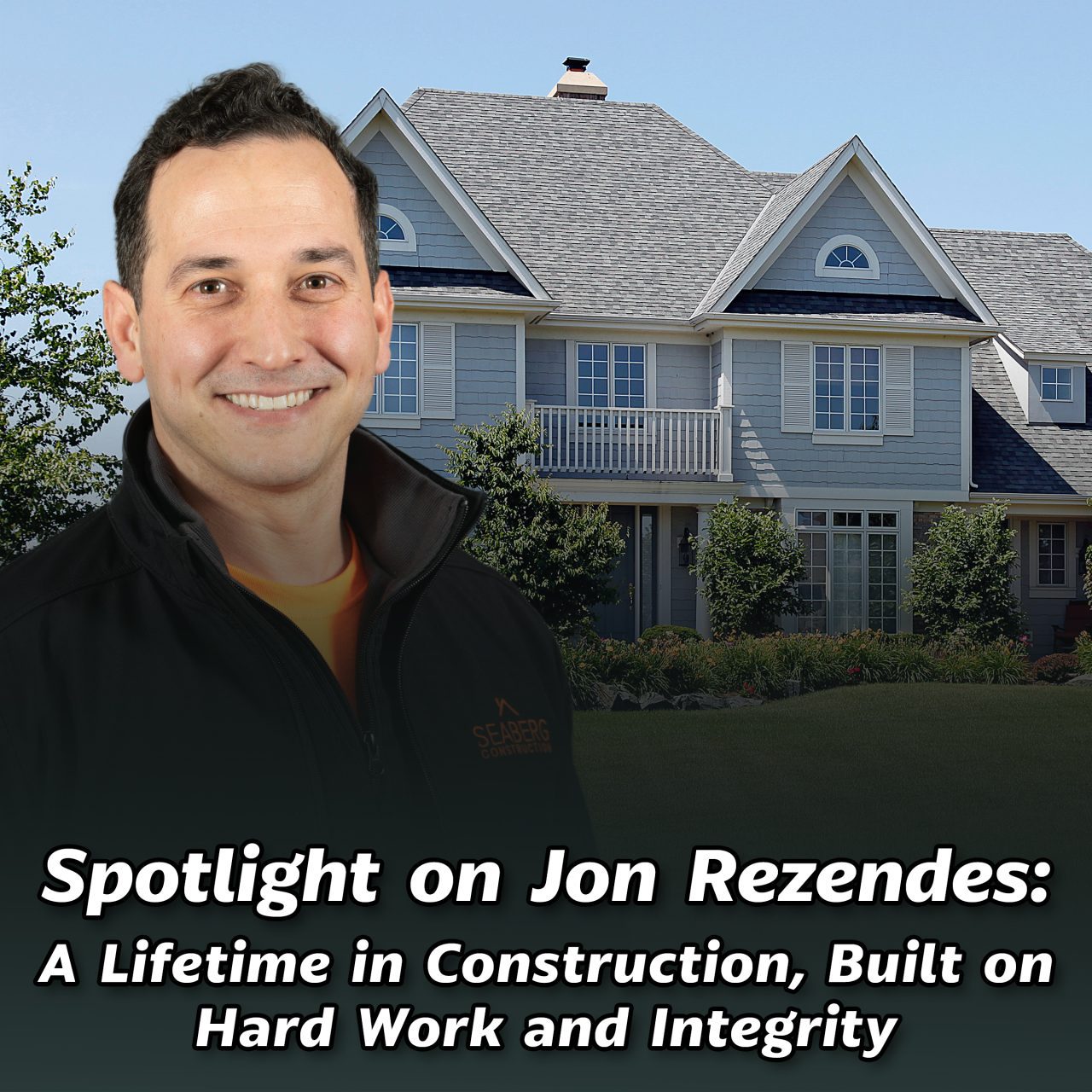
Jon Rezendes: A Lifetime in Construction, Built on Hard Work and Integrity
Jon Rezendes was just 13 years old when he started working in construction.
Raised by a single mother alongside his older brother and two younger siblings, Jon began working at an age when most kids are just starting to think about what they want to be when they grow up. His early introduction to the construction industry would become the foundation of a career spanning decades, giving him firsthand experience with the challenges of building, maintaining, and improving homes.
His first responsibilities were simple. He helped clean up construction sites and assisted wherever he was needed while working for a friend who owned a construction company. He continued working through high school, including school vacations.
What began at 13 became much more than a job. It became a lifelong career built on practical knowledge, hard work, and a growing understanding of what it takes to do construction right.
Today, Jon brings decades of experience to his work, along with a philosophy that goes beyond materials, estimates, and installation. He believes homeowners deserve honest answers, thoughtful recommendations, and the knowledge they need to make confident decisions about their homes. He was frankly tired of seeing homeowners get taken advantage of by unsavory contractors.
Because to Jon, improving a home should never be just about completing a project. It should be about helping people make the right decisions for one of their most important investments.
Starting Young: Where the Foundation Was Built
Jon’s introduction to construction was practical, not glamorous.
At 13, he began learning the industry from the ground up. Cleaning job sites and helping wherever needed may not sound like the beginning of an expert’s career, but those early responsibilities introduced him to the realities of construction long before he was responsible for managing projects or advising homeowners.
He learned through observation, focus, and hands-on experience. An effective construction team member possesses the foresight to anticipate a crew lead’s needs before they are even voiced; what begins as a request like, “Hand me that hammer,” soon evolves into Jon having the tool ready before the words are even spoken.
As he continued through high school, construction became an increasingly important part of his life. After graduation, he moved into full-time work, building on the experience he had already accumulated as a teenager.
Those early years gave Jon an understanding of the industry that cannot be gained from books alone. Construction requires practical judgment, attention to detail, and the ability to recognize how individual decisions affect the finished result.
A material can look right on paper but perform poorly if it is installed incorrectly. A problem that appears minor on the surface can sometimes point to a more significant issue underneath. And work that looks complete is not necessarily work that has been done properly.
Learning to recognize those differences takes time.
Jon spent years developing that knowledge through direct involvement in residential construction, including carpentry, framing, roofing, and other aspects of building and improving homes.
That hands-on foundation would eventually prepare him for a much larger responsibility: running a construction business of his own.
From Working in the Trade to Running a Business
By his early twenties, Jon had progressed from working on job sites to running the company he worked for.
It was a major transition. Knowing how to perform construction work well is one thing. Taking responsibility for an entire business introduces an entirely different set of challenges.
A successful project requires more than technical skill. It requires planning, budgeting, scheduling, communication, coordination, and the ability to make sound decisions when unexpected problems arise.
It also requires understanding the people involved.
Homeowners are making significant financial decisions. Employees depend on consistent work and clear expectations. Projects require coordination between different trades, suppliers, and schedules. Every decision has consequences, and the person leading the operation must be prepared to take responsibility for them.
Jon gained experience navigating those responsibilities early in his career.
In 2006 at aged 25, he decided to establish his own roofing business. By then, he had spent years learning the trade, developing his practical expertise, and gaining an understanding of what it takes to manage residential construction projects.
His background in carpentry and framing gave him a strong foundation in how homes are built. His experience across different types of residential work also helped him understand that a home should be viewed as a complete system rather than a collection of unrelated parts.
Consider a roof. Its performance depends on more than the shingles a homeowner sees from the street. Installation methods, ventilation, underlying materials, flashing, and drainage can all influence how well the roof protects the home.
The same principle applies to siding, windows, doors, and other exterior components. The products matter, but so does understanding how they interact with the existing structure.
That broader perspective is one of the benefits of experience. It allows a professional to look beyond the immediate request and consider what the home actually needs.
What Decades in Construction Teach You
After spending decades in the industry, Jon understands that knowing how to complete a project is only part of the job.
Knowing what questions to ask before the work begins can be just as important.
A homeowner might call about replacing a roof when the immediate concern is a leak. Someone considering new siding might be dealing with deteriorating materials, moisture problems, or years of maintenance. A homeowner planning a deck might be focused on appearance without realizing how much the design, materials, and structural details will affect long-term performance.
The first solution that comes to mind is not always the best one.
An experienced professional knows to look more closely, understand the homeowner’s concerns, and determine what is actually happening before recommending a course of action.
Sometimes replacement is the right decision. Sometimes a repair is sufficient. In other situations, the homeowner may need a better understanding of the available options before deciding how to proceed.
The answer depends on the home’s condition, the nature of the problem, the homeowner’s priorities, and the long-term goals for the property.
Jon believes those factors should guide the recommendation.
Homeowners should not feel that the only path forward is the most expensive one. They should understand what needs attention, why it matters, and what alternatives may be available.
This is where experience becomes especially valuable. It helps a professional distinguish between what can be done, what should be done, and what is actually necessary.
That distinction can save homeowners unnecessary expense, prevent avoidable problems, and help them make decisions they feel confident about long after the project is complete.
Why Educating Homeowners Matters
Home improvement can be an intimidating experience.
Most homeowners do not spend their days researching roofing systems, comparing siding materials, evaluating installation methods, or learning how construction details affect long-term performance.
They know their home. They understand what they like about it, what frustrates them, and what they hope to improve. But they may not know whether a contractor’s recommendation is necessary, whether another option would work just as well, or what questions they should be asking before committing to a project.
That uncertainty can make an already significant investment feel overwhelming.
Jon believes homeowners deserve better than being expected to make expensive decisions without fully understanding their options.
Education should be part of the process.
If a particular material is being recommended, the homeowner should understand why. If there are alternatives, those alternatives should be explained. If a problem requires immediate attention, the reasons should be clear. And if something can reasonably wait, the homeowner should have enough information to understand that, too.
This approach requires patience and a willingness to explain technical concepts in everyday language.
It also requires recognizing that homeowners should feel comfortable asking questions, even when those questions seem basic.
There is no reason someone should need a background in construction to understand what is happening to their own home.
An experienced professional should be able to explain complicated things clearly, without making the homeowner feel uninformed or pressured into a decision.
For Jon, the goal is not simply to provide an answer. It is to help homeowners understand the reasoning behind that answer.
When people understand their options, they are better equipped to compare proposals, evaluate recommendations, and make decisions that align with their needs and budgets.
That knowledge gives them something valuable: confidence.
What Homeowners Should Expect From a Contractor
A successful home improvement project involves much more than the finished product.
The quality of the materials matters. The craftsmanship matters. But so do the conversations before work begins, the expectations established along the way, and the way questions or unexpected issues are handled.
Jon believes homeowners should expect a contractor to communicate clearly, explain recommendations, and be straightforward about the work being proposed.
They should understand what is included in the project, what decisions they need to make, and what questions deserve answers before they commit.
They should not have to navigate unnecessary pressure to reach a decision.
And they should never feel that asking for clarification is an inconvenience.
These expectations may sound simple, but they reflect a larger philosophy: professionalism is demonstrated throughout the entire experience, not just in the finished result.
Honesty matters when explaining what a home needs. Integrity matters when a less expensive option may be sufficient. Accountability matters when something does not go according to plan.
Construction is complex, and no project is entirely free of uncertainty. What homeowners should be able to expect is a professional who communicates openly, addresses problems directly, and takes responsibility for the work being performed.
For Jon, doing the right thing means putting the homeowner’s interests at the center of the decision.
Sometimes that means recommending a particular product or project. Sometimes it means explaining why a different approach makes more sense. And sometimes it means telling a homeowner that they do not need to spend money on something they initially thought required replacement.
The objective should not be to sell the biggest project possible. It should be to help the homeowner arrive at the right decision.
A Home Is More Than a Building
Jon’s understanding of homes extends beyond the job site.
He has spent years living in home built in 1900 in Manville, Rhode Island, experiencing many of the same considerations that other owners of older properties face.
Older homes can have tremendous character. They often reflect the architectural styles and craftsmanship of another era, sit within established neighborhoods, and carry years of memories for the people who live in them.
But they can also require ongoing maintenance and careful decisions about where to invest.
Living in an older home offers a practical understanding of the balance between preserving what makes a house special and making the improvements necessary to keep it functional, comfortable, and well maintained.
Homeowners must consider their immediate needs alongside their long-term plans. They have to determine which projects deserve priority, which improvements will provide meaningful value, and how to make decisions within a realistic budget.
There is rarely one answer that works for everyone.
A homeowner planning to stay in a property for decades may approach a project differently from someone preparing to sell. Someone focused on minimizing maintenance may prioritize different materials than someone whose primary concern is appearance.
The right recommendation depends on the person as much as the property.
That is an important distinction. A home improvement professional should not simply look at a house and identify everything that could be changed. The goal should be to understand what the homeowner wants to accomplish and help them determine which improvements make the most sense.
After all, a home is not a project waiting to be completed. It is a place where life happens.
Practical Advice for Making Better Home Improvement Decisions
For homeowners preparing to invest in their properties, Jon encourages a thoughtful approach that begins with understanding the problem before choosing the solution.
Before committing to a major exterior project, consider these five questions.
1. What actually needs attention?
Understand the condition of the existing materials and determine whether the concern is cosmetic, functional, or related to a larger underlying issue. A clear assessment helps prevent unnecessary work and focuses attention on the problems that matter.
2. Can the problem be repaired?
Replacement may be appropriate, but it should not be assumed without evaluating the condition of the existing materials and structure. Ask whether a repair is a reasonable option and understand the advantages and limitations of each approach.
3. What are the available options?
Different products and installation methods can affect cost, appearance, maintenance, durability, and expected service life. Ask your contractor to explain the differences in practical terms so you can compare options based on your priorities.
4. What matters most to you?
Your budget, aesthetic preferences, maintenance expectations, and plans for the property should influence your decision. The best solution is one that addresses the home’s needs while making sense for the people who live there.
5. Do you understand the recommendation?
Before agreeing to work, make sure you understand what is being proposed, why it is necessary, what is included, and what you can expect throughout the process. A reputable professional should welcome reasonable questions and provide clear answers.
These questions are not intended to turn homeowners into construction experts overnight. They are meant to help people become more informed participants in decisions about their own homes.
When homeowners understand the reasoning behind a recommendation, they are better positioned to evaluate proposals, recognize quality workmanship, and choose solutions that fit their circumstances.
That is a far better starting point than making a decision based on pressure or uncertainty.
Beyond Construction
Away from work, Jon enjoys hiking, skiing, and traveling throughout the United States with his wife in their self-converted van RV.
Travel provides opportunities to experience different communities, landscapes, and ways of living. Time outdoors offers a chance to step away from daily responsibilities and appreciate the places people build their lives around.
For someone who has spent decades working on houses, the distinction between a structure and a home is especially meaningful.
A home is not simply a collection of materials. It is where people return after a long day, gather with family, welcome friends, and build memories over the years.
Improving a home should ultimately support that experience.
The best project is not necessarily the biggest or most expensive one. It is the one that addresses a genuine need, reflects the homeowner’s priorities, and helps the property serve its purpose more effectively.
Sometimes that means solving a problem that has been causing frustration for years. Sometimes it means improving the appearance of a house that no longer feels right to its owners. And sometimes it means helping a homeowner understand that the best decision is to wait, plan, or approach the project differently.
Whatever the circumstances, the purpose should remain the same: help people make informed decisions about the places that matter to them.
Helping Homeowners Move Forward With Confidence
Jon Rezendes has spent much of his life learning how homes are built, how they age, and what it takes to improve them thoughtfully.
His career began with simple tasks on construction sites as a teenager. It developed through years of hands-on work, increasing responsibility, business ownership, and experience navigating the challenges of residential construction.
That history has given him practical knowledge of the trade. Just as importantly, it has shaped his belief that homeowners deserve to understand the decisions being made about their homes.
He believes people should have access to clear information, honest explanations, and professional guidance they can trust.
They should feel comfortable asking questions. They should understand their options. And they should be able to make decisions without feeling that someone else’s sales goals matter more than their own needs.
These principles are not complicated, but they make a meaningful difference in an industry where homeowners are often navigating unfamiliar territory.
Jon’s perspective is straightforward: look closely, ask the right questions, explain the options, and put the homeowner’s needs at the center of the decision.
Because improving a home should not begin with pressure or confusion.
It should begin with understanding.
And when homeowners have the knowledge they need to move forward with confidence, they are better positioned to make decisions they will feel good about.