

Wood Rot, Bureaucracy, and the Art of Working with Your Historic District Commission
I was driving through the East Side of Providence the other day—navigating those notoriously narrow, pothole-riddled streets near Brown University—and I couldn’t help but marvel at the architecture. Beautiful, towering Victorians. Gorgeous, stately Colonials. Rhode Island is practically dripping with historic charm, from Cranston’s oldest pockets right down to the coastal capes of Newport and Bristol.
But as a contractor, I look at those homes and my wallet immediately starts to ache for the owners.
If you own a slice of New England history, you already know the nightmare. It’s a never-ending cycle of scraping, priming, painting, and watching your hard-earned money rot away in the humid summer air. Naturally, you start dreaming about zero-maintenance architectural shingles, advanced vinyl, or fiber-cement siding.
Then, reality hits. The local Historic District Commission (HDC).
Just the mention of those three letters is enough to give local homeowners hives. You assume they’ll flat-out reject anything that wasn’t chopped down in a forest circa 1880. But you know what? That’s not entirely true anymore. You can protect your home with 21st-century durability without getting chased out of town by a crowd wielding pitchforks and historic preservation handbooks.
Let’s talk about how to actually design a project that gets an easy green light from the HDC.
The HDC Mindset: They Don’t Actually Hate Progress
Here is a little secret about historic boards: they aren’t trying to ruin your life. I know, it feels like it when they spend forty-five minutes debating the exact shade of off-white you want to paint your trim, but their actual goal is visual preservation.
According to guidelines from the Rhode Island Historical Preservation & Heritage Commission, what they really care about boils down to scale, texture, profile, and shadow lines.
When a board denies an application for modern materials, it’s usually not because the material is new. It’s because the installation looks flat and unnatural from the sidewalk. If you try to slap cheap, thin siding over old wood, it kills the architectural depth of the house. It looks like a toy.
The strategy is presenting a plan that respects and replicates the original craftsmanship so perfectly that the board naturally embraces the upgrade.
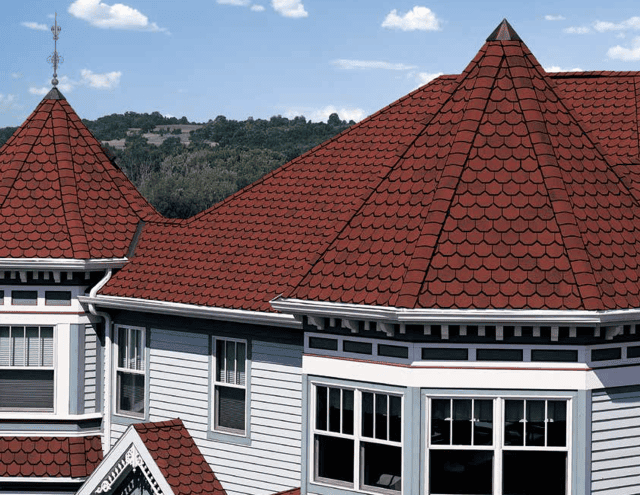
Roofing: Ditching the Slate Price Tag Without Losing the Look
Let’s be real. Authentic slate and cedar shake roofs look stunning. They also cost an absolute fortune—we are talking astronomical numbers that can easily push a homeowner into a financial crisis. Plus, trying to find a local crew who actually knows how to repair real slate nowadays? Good luck.
So, how do you find middle ground?
| Shingle Style | Visual Impact | HDC Approval Likelihood |
| Traditional 3-Tab | Flat, uniform, and lifeless. Looks like a paper highway on your roof. | ❌ Extremely Low (Instant denial) |
| Designer Architectural | Thick, dimensional tabs with deep shadow lines that mimic stone or wood. | Extremely High (With proper color match) |
You have to look at designer or luxury architectural shingles. Standard, cheap 3-tab shingles will get laughed out of the room because they lack depth. But heavy-duty, dimensional shingles are a whole different beast. Manufacturers have gotten incredibly smart, engineering shingles with jagged cuts and deep tabs that create the exact same heavy shadow lines as natural wood shakes or slate.
When we handle an HDC presentation, we don’t just show up with brochures. We bring the heavy physical samples. Letting the board feel the weight and see how the light catches the dimensional edges makes a world of difference.
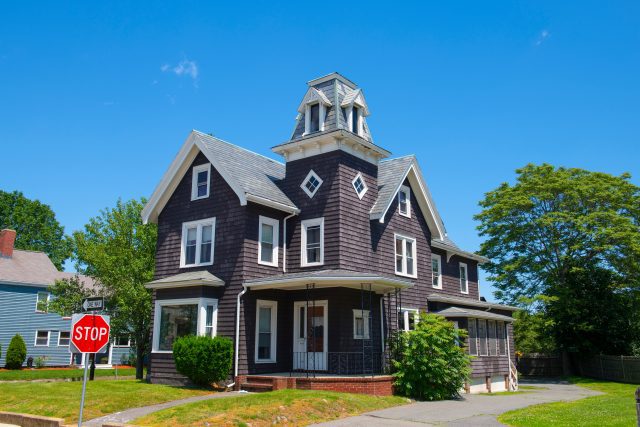
Siding: The “Reveal” is Your Secret Weapon
If you are dealing with traditional New England clapboard or cedar shingles, the humidity around the Narragansett Bay is your worst enemy. It gets trapped behind the paint, causing it to bubble, peel, and crack within a few years. It’s a soul-crushing chore to keep up with.
If you want to break the cycle, you need to know about two specific options:
Polymer Shakes (The Low-Maintenance Twin to Real Cedar)
For homes with cedar shingles, premium polymer shakes—like CertainTeed’s Cedar Impressions line—are absolute lifesavers. These aren’t the cheap plastic panels from the 1990s. They are molded from real, rough-sawn cedar pieces, capturing every little knot and grain imperfection.
The key to getting this past the inspectors? The reveal. The reveal is just the height of the exposed shingle row. If your home’s original wood shingles have a 5-inch exposure, you must install a polymer panel with a 5-inch exposure. If you match the profile and avoid an unnaturally shiny gloss finish, it’s virtually impossible to tell it’s not real wood from the street.
Fiber Cement
For standard horizontal siding, fiber cement (made of sand, cement, and cellulose) is the darling of many historic boards. It’s rigid, heavy, and creates the sharp, clean lines of authentic wood planks. It doesn’t warp, it doesn’t rot, and bugs hate it. It holds paint beautifully, too, meaning you won’t be out there with a scraper every three years.
📝 The “HDC-Friendly” Siding Checklist
-
[✓] Look for the Reveal: Match the original exposure width of your old siding down to the exact fraction of an inch.
-
[✓] Kill the Shine: Absolutely no shiny, glossy, or unnaturally smooth plastic finishes allowed.
-
[✓] Keep it Chunky: Do not shrink your trim. Keep the deep, historic wood framing around your windows.
-
[✓] Go Matte: Stick to historically accurate, low-gloss color palettes approved for your specific neighborhood.
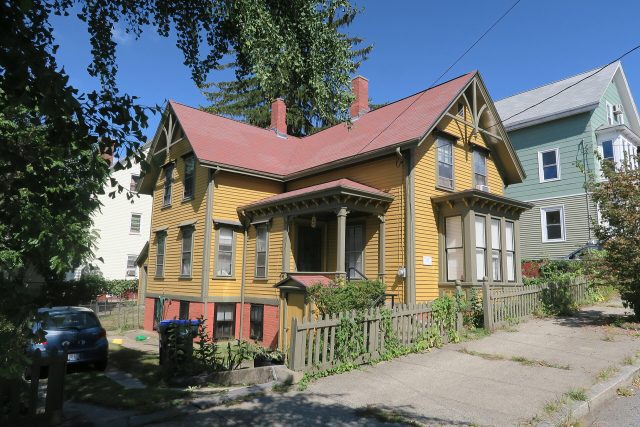
Trim is Where the Battle is Won or Lost
Listen closely: you can have the most beautiful siding in the world, but if your contractor uses cheap, flat aluminum wrap around your windows and corner boards, the HDC will shut your job down faster than a New England nor’easter.
The soul of an old Victorian or Greek Revival isn’t in the flat walls. It’s in the chunky corner boards, the decorative dental moldings, and the deep window casings.
To save these features without inviting future rot, we rely heavily on cellular PVC trim. This stuff is brilliant. We can cut it, route it, and shape it using standard woodworking tools to match your home’s unique historic flourishes. Once it’s painted with a high-quality matte paint, it looks exactly like historic pine. The best part? It absorbs zero water. It will never split, decay, or play host to carpenter ants.

Don’t Guess Your Way Through the Permit Process
If you’re thinking about updating your exterior this year, please don’t just wing the paperwork. A little homework upfront avoids months of bureaucratic headaches.
-
Get the handbook: Towns like Providence, Cranston, and Newport have explicit design guidelines available online. Read them before you fall in love with a specific material.
-
Proactively document the decay: Take photos of the worst rotted sections of your current siding. Show the board that replacing it with a modern alternative is actually helping to save the home from falling apart.
-
Lean on a pro: Work with a team that actually understands local New England architecture and knows how to speak the commission’s language.
Wrapping It Up
Look, you don’t have to choose between keeping your home’s historic integrity and losing your sanity to constant maintenance. By pairing the right high-performance architectural materials with an installation that respects the original scale and depth, you can keep the local history buffs happy while locking in a lifetime of protection.
At Seaberg Construction, we live and work in these same neighborhoods. We know the rules, we know the materials, and we know how to make the process as painless as humanly possible.
Got an old home that needs some modern love? Let’s talk about it. Stop by www.seabergconstruction.com and set up a free, zero-pressure consultation today. Let’s make your home maintenance-free.

Read Seaberg Construction’s Google reviews left by homeowners like yourself: https://tinyurl.com/kkxwhx8k
Follow us on Facebook: www.facebook.com/seabergconstruction and Instagram: www.instagram.com/seabergconstruction to stay up-to-date with our current projects and news.
To obtain your complimentary estimate from Seaberg Construction, please complete the form available on our website: https://seabergconstruction.com/about-us-roofing-company/contact-us/
And, don’t forget to read our other blog posts for more home improvement tips and ideas: http://seabergconstruction.com/home-owners-information-center/